Play is how you learn what no one has figured out yet
There are two ways to learn: from a teacher with the answer, or by playing until you work it out. Topics like AI need the second, yet we default to choosing the first.
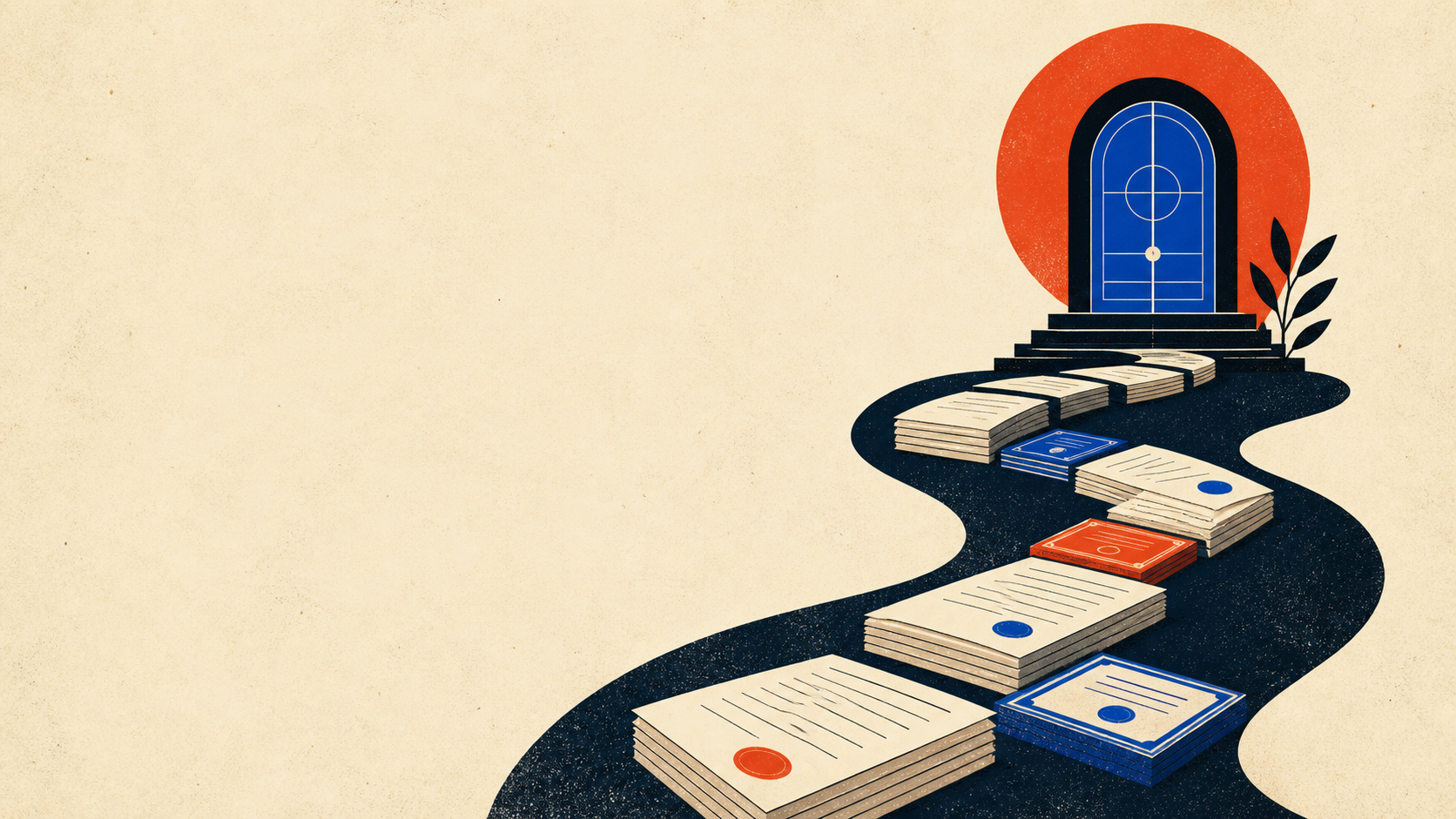
In Singapore, whenever there's something new to learn, it seems like many of us default to a familiar pattern of behaviour: finding a training course to attend.
It's a national habit, and the whole apparatus is there to make it easy: SkillsFuture credits to spend, Coursera and Udemy a click away, Training Providers with a catalogue and a certificate waiting at the end.
So when AI became the thing everyone was suddenly supposed to learn, the machinery did what it does. Prompt engineering and ChatGPT courses appeared, with organisations promoting training and people signing up.
For me, a lot of this felt oddly hollow. I think I finally understand why, and it comes down to two very different ways of learning something.
What courses are good at
A course works by packaging someone else's understanding into a form they can hand to you. That's useful because it saves you from slowly, painfully rediscovering what someone already knows.
But it only works when the subject is stable enough. Newton's Laws of Motion can be taught well because the answers it provides will remain true across time. The syllabus written this year is still right next year, and the examiner knows what a "correct answer" looks like.
In other words, courses are great for slow-moving, well-understood things, which, until pretty recently, covered most of what a person needed to learn.
But topics like AI are evolving quickly
For something like AI, the advice keeps shifting. Not long ago, people were taught to add "Let's think step by step" to a prompt, or open with a persona like "You are a world-class expert in...". Newer AI models can now reason on their own and no longer need such "techniques".
Things move even faster in the space of AI tools. There's a constant churn of new ways to work: ChatGPT, then OpenClaw, then Claude Cowork, each one quietly redefining what "knowing how to use AI" even means. A course built on tools made 3 months ago might already be half out of date before its first class even begins.
This isn't the fault of the course, or of whoever wrote it. The course may still be useful as a starting point. The problem is mistaking the starting point for the whole journey. There's no settled answer to package up, because the timeless understanding doesn't exist yet in a form anyone could hand you.
So after instruction has taken you as far as it can, another teacher has to take over: reality itself.
The other way to learn
Learning from reality has a name: play.
I know "play" sounds like a soft word for something this important. But play is just this: you try something before you fully understand it, you watch what happens, and you adjust.
Hand a child a tablet. No one walks them through the grid of apps or demonstrates how swiping differs from tapping. They poke at icons, watch what opens, drag things sideways, accidentally open the camera, close it, find it again. Within an hour they're navigating the device better than some adults.
And here's what makes this more than cute: the surface underneath them never stays still. Apps update, layouts change, new ones appear, old ones vanish. The thing they mastered last week might look different today. There is no settled version of the user interface to be taught, and yet the child doesn't care. They just play again. They've learned something deeper than any single interface: how to feel their way through an unfamiliar one.
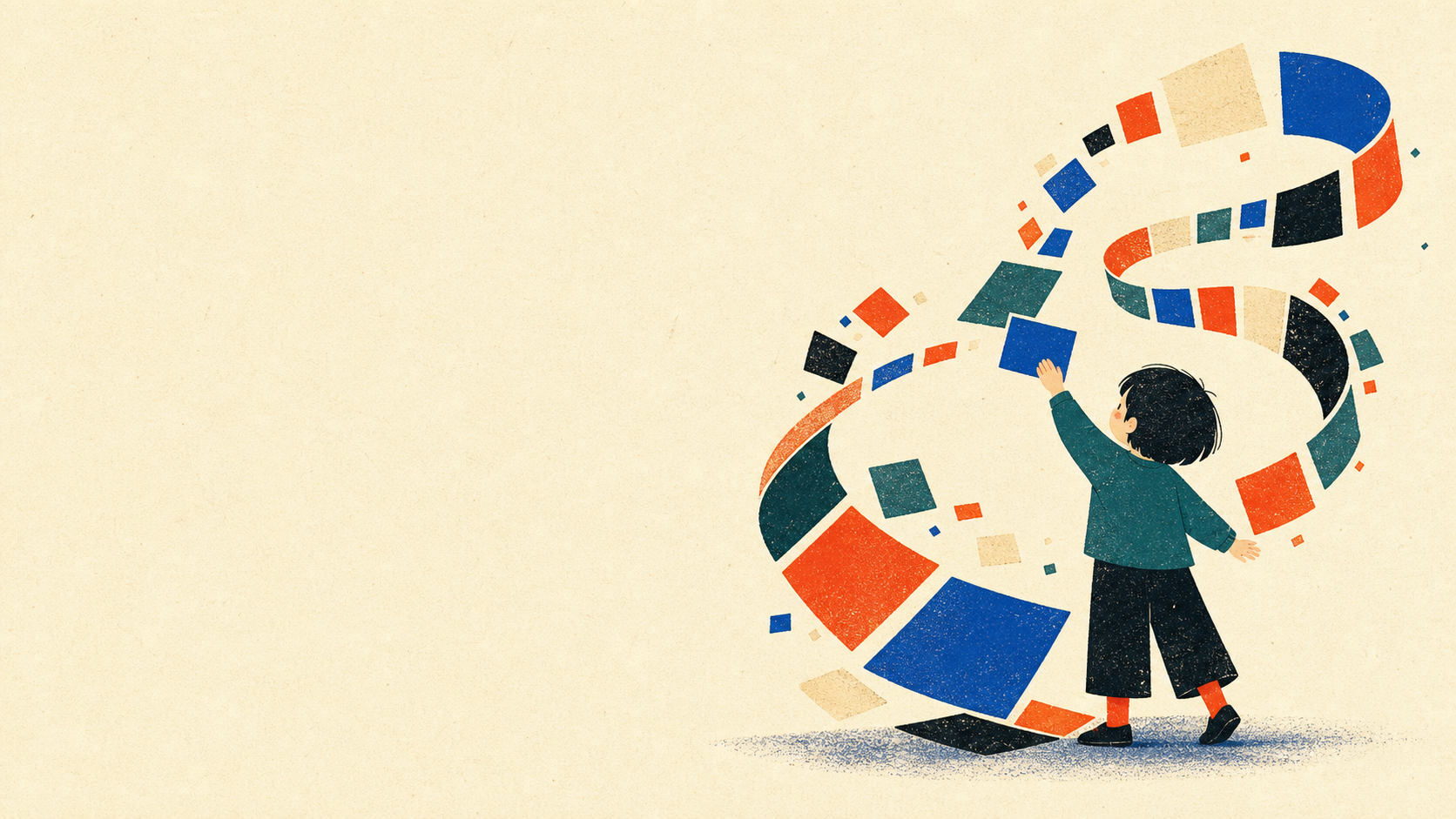
Play looks inefficient because it's full of mistakes. But when a subject is still shifting and changing, the mistakes aren't waste. They're the only signal you've got, because reality is the only thing that actually knows the answer.
This was roughly the thread Olof Schybergson pulled on at a recent dialogue session on human-centred AI by Lorong AI. With his experience at Fjord and Accenture Song, he could easily have talked about process or rigour. Instead, he talked about play, and his theory that the future of work will be playful.
But play is for children
There's an obvious objection here, and it's the gut feeling that play is something we file under "childish behaviour". Adults are supposed to have grown out of it.
Look at how we act at work. We show up as "professionals". We execute tasks, follow processes, move tickets across a board, report against KPIs. All of that is lesson mode in office clothes: a known outcome, a defined path, a clear definition of done. There's no place in a performance review for "spent three weeks playing with a new tool, shipped nothing, but now actually understands it". And when play does sneak into adult work, we quietly rename it into something that sounds more responsible. We call it research, or exploration, or a pilot.
To be fair, some workplaces already invest in this. Hackathons and innovation sprints are proof that play works, and the people who join them come away sharper and more willing to experiment. But the people who show up tend to be the ones already comfortable with uncertainty. The people who need to play most are often the ones the format never reaches.
So the exact mode a shifting subject demands is the one professional life has trained us to suppress. We didn't lose the ability to play. We were taught, gently and constantly, that it isn't what serious people do.
Play runs on agency
Play has a requirement of its own, and that's where Philip Man comes in. Also speaking at the same talk, Philip heads GovTech's newly formed Innovation Office. He kept coming back to two ideas: intention and agency.
Agency, the way he frames it, is the space between intent and action. It's the room to act early, on an unfinished idea, and to be corrected by whatever happens next. Take that room away and you don't have play anymore. You've got a lesson with extra steps.
So learning something genuinely new isn't really about finding the right course. It's about whether you have the agency to play your way into it.
I see this in my own work. I didn't learn to build software with AI from a course. I learned it by building small tools for myself, shipping things that were a bit broken, and letting each one show me what I misunderstood. No syllabus could have given me that, because the subject kept moving while I was learning it. What made it work wasn't instruction but the permission I gave myself for the early attempts to be bad.
The same word, aimed at machines
Here's a strange echo. Agency is also the word the AI industry has landed on for its most capable systems. An agentic AI system is software that is given room to act toward a goal instead of waiting for instruction at every turn.
And a lot of the careful work happening right now is to contain that agency. Spec-driven development, for example, defines the inputs, outputs, constraints, and edge cases up front, shrinking the model's room to wander. Less agency, fewer surprises. For an AI system running in production, that trade-off is often sensible.
Look again at what "development" usually means for adults at work: a defined curriculum, an approved course, a certificate at the end. Like spec-driven development, this is reassuring because it is legible, plannable, and accountable. You can point at the syllabus and say, look, this is what we're doing for them. But the same containment that reduces surprise also removes the space where people learn to notice, try, misread, recover, and form judgment of their own.
The space that isn't there yet
Our entire learning setup (courses, certificates, KPIs, credits) was designed for a world where the thing worth learning could be packaged into a syllabus. It left little room for play, because the subjects it was built for never demanded it.
But when we ask people to figure out something genuinely shifting, training courses are not enough on their own. Such subjects need lessons and play; the play is where the real judgment forms.
A course can only carry you as far as someone has already mapped. Past that line, the work is no longer to deliver the right lesson. It is to design the conditions where playful learning can actually happen.
We already know how to do this for machines. Every digital system gets a sandbox, a staging environment, a place where it can fail without consequence. We would never skip that step for software. But for people learning something new, we skip it all the time. We send them to a course and expect them to come back production-ready. The work ahead is giving people what we already give our software: somewhere safe to fail.